
Over the coming weeks, I hope to share some interesting stories about our South African mining history. I will focus on tales that speak of hope and disappointment and the deeply human nature of mining itself. Humans have always worked with what the land and sea provide, through farming, fishing and, in the same way, mining.
Mining is about people, but also place and the moments when the earth decides.
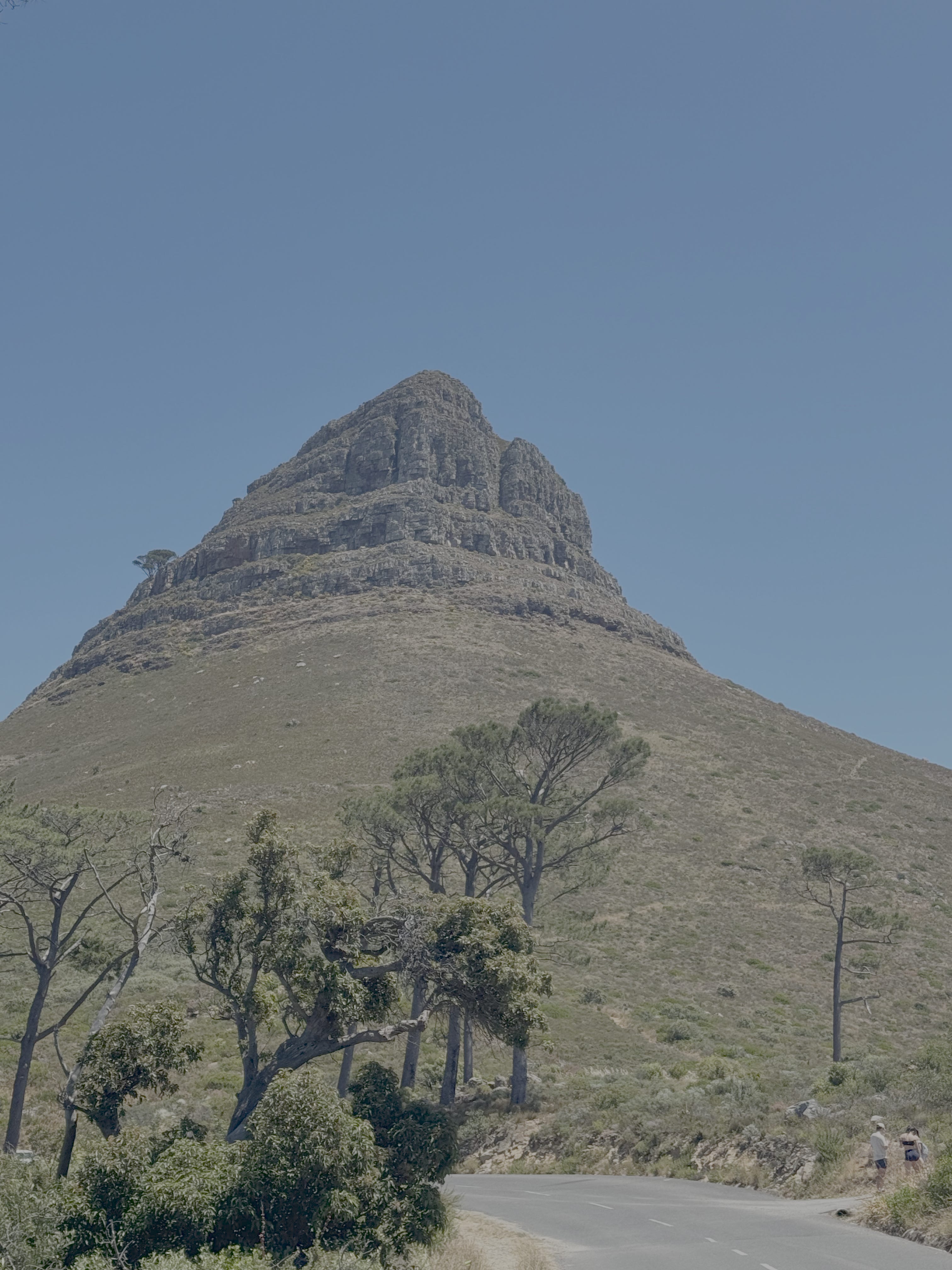
This photo is from the tarmac road above the lower slopes of Lion’s Head in Cape Town. It serves as a backdrop to a story about a gold rush that never was. This is where the city briefly stood on the edge of becoming something different.
In September 1886, gold was discovered here. The news electrified the city. Because this happened in the same year the Witwatersrand was proclaimed, Cape Town briefly seemed in competition for shaping the nation’s mining ambition. A Gold Mining Company was floated in 1887. Shafts were sunk to 145 feet. Wilkinson’s Mill in Kloof Street assayed ore for sampling. Dr P.D. Hahn of the South African College reported optimistically. But the ore grades were insufficient. Assays abroad delivered an unfavourable verdict. By 1891, the Company was liquidated. And the shafts, filled in as a safety precaution, became abandoned markers of hard labour and failed investment.
We do not know the names of those who dug those shafts; their labour is erased, marked only by the fact of insufficient gold. Landscapes remember differently to archives. They remember silently, and in stone.
What is extraordinary is what did not happen. Capital and geology steered the mining boom north, where Johannesburg’s gold fields became an industrial force. Cape Town became a centre for other industries, never again to hold mining’s imagination.
The filled-in shafts mark how a different geology might have changed Cape Town and its people. Looking up at this mountain, I sense two realities: one where Cape Town was shaped by mining, and the one we actually inhabit. The mountain remains magnificent. The ore remains buried. But the labour, ambition and brief rise of hope have folded back into the mountain’s silence.
Mining is also about honouring its people. Here, I hold in view the Goringhaiqua and San people, the Camissa people whose identity is tied to the rivers that run from this mountain. I see the community that built Bo-Kaap on the lower slopes of Lion’s Head. I recognise those adventurers who took risks and failed, those workers who laboured here for no recognition, and the people of Cape Town in 1886, living in their diversity and agency in this brief chapter of the city’s story.
Cape Town might have become a mining town. That moment passed. The memory of human endeavour, labour and ambition faded, now as quiet as breath on the summit.
This story is also on LinkedIn, published on 14 Nov 2025