
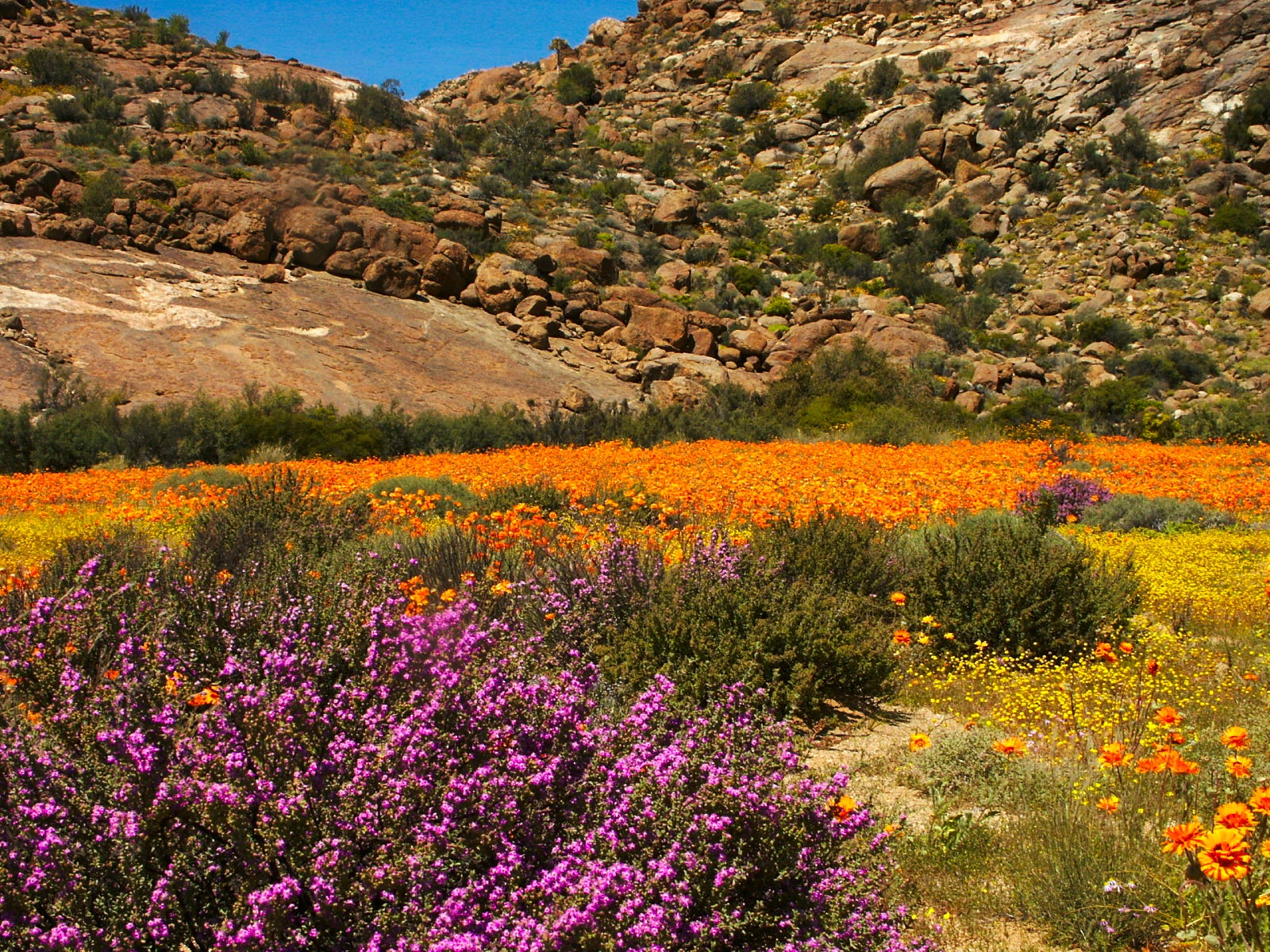
Anyone who has seen Namaqualand in flower season knows this rhythm. Most of the year, the land is dry and dormant. For a few weeks, the fields erupt with colour, life, and density before fading again. The bloom isn’t permanent; the return is. Springbok’s mining legacy has mirrored that pattern.
In 1919, Namaqualand’s copper mines died in a day. Cape Copper Company shut its doors; workers got a week’s pay. Shareholders realised a more than twenty-sevenfold return. The district that gave South Africa its first industrial mine was left with abandoned shafts and families without wages or jobs.
For nearly two decades, the copper belt hibernated.
In 1937, Okiep Copper Company formed, with Newmont Mining as its largest shareholder. Within years it owned the main mines and restarted Nababeep.
Newmont’s stewardship mattered. Over four decades, their patient capital revived the district into a modern mining complex. New mines opened. Pipelines brought water from Buffels River. Exploration added dozens of deposits. Output settled near 40,000 tonnes. Dividends and wages were paid. For two generations, that stability anchored life in Springbok, Okiep and Nababeep.
In 1984, Newmont sold to Goldfields. Goldfields, primarily a gold company, held and oversaw Okiep Copper Company as a struggling copper investment through a period of weak prices, before selling its stake to another operator in 1998.
By 2004, the mines were closed and workers retrenched. Okiep’s plant was dismantled, transported thousands of kilometres into central Africa to Ruashi and Kinsenda, and reassembled there, where it now produces thousands of tonnes of copper.
For yet another twenty years, Springbok district’s mines would fall silent.
Now copper is back. Copper 360 is already producing. Listed in 2023, the company deployed plants to re-mine old dumps around Nababeep. A third plant came online in 2024. Copper 360 is producing now.
Orion Minerals is taking the long view. The company rebuilt the Okiep database and is developing a modern underground and open-pit complex. Recent drill results (49 metres at 4.89% copper, including 10.23 metres at 12.47%) are among the highest-grade intercepts in South Africa in decades.
Both operate under the Mining Charter. Both face old challenges with water and logistics. Both must answer to communities that remember what happens when owners leave. Those memories run deep.
But Springbok’s copper has died and returned three times.
#MiningIsHuman means recognising this familiar rhythm. There is still ore there, and the first green shoots are showing. What remains is to bring the patience, investment, and commitment needed to sustain this new chapter—and the people of Springbok district.
This story is also on LinkedIn, published on 20 Jan 2026.