
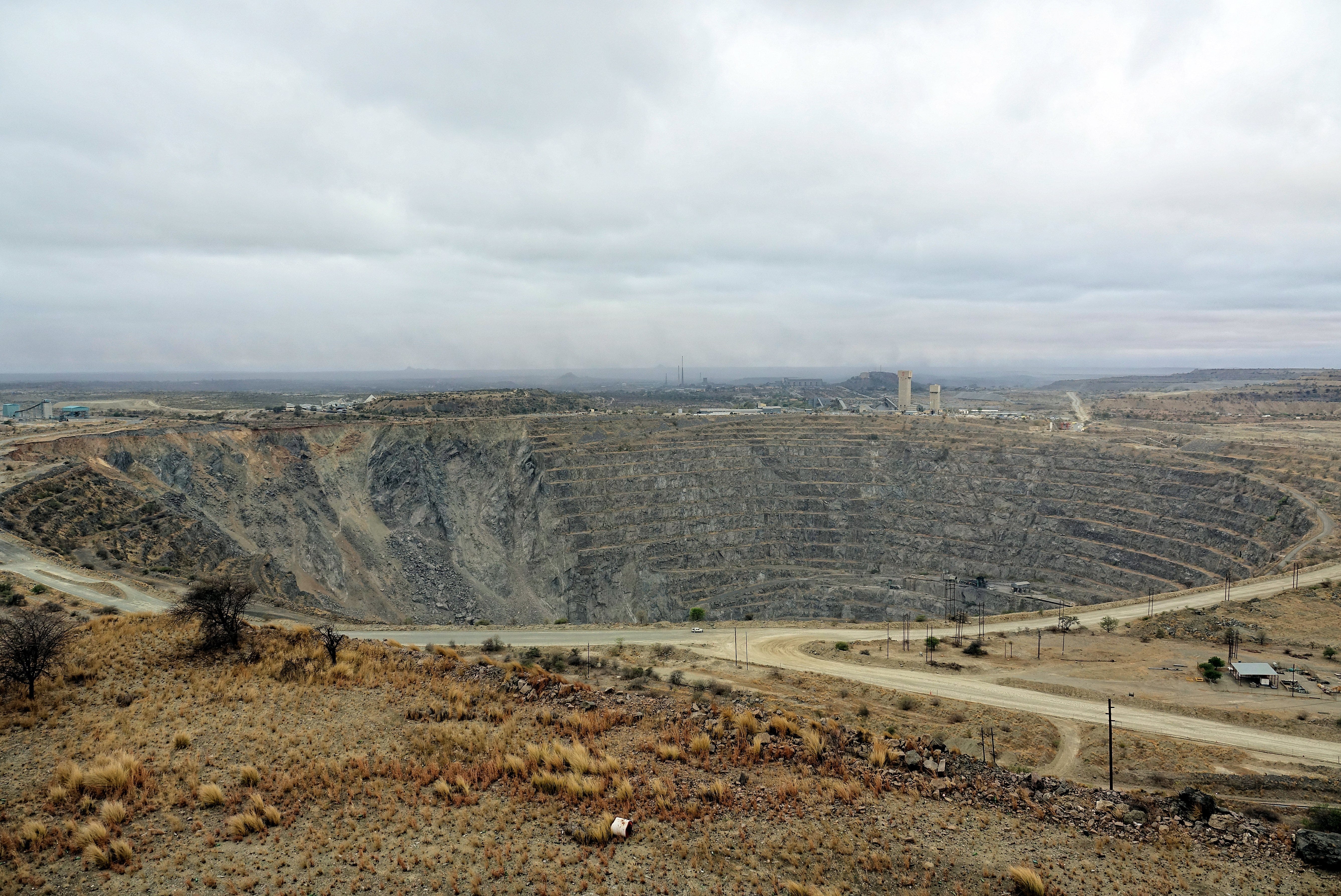
Palabora’s Loolekop began as an Iron Age mining site around 770 AD. For over twelve centuries before European investment or modern technology, people mined copper from this Limpopo hill. That history matters. Mining here is more than industry; it’s built on generations of knowledge and purpose. Exceptional orebodies require patience and care. That’s the heart of hashtag#MiningIsHuman.
The hill is geologically unique: a carbonatite-foskorite intrusion with copper, magnetite, phosphate, vermiculite, and rare earths. This mineral mix requires teamwork, long-term investment, and integrated processing. Ancient miners studied surface rocks; today’s engineers drill deep. The tools have changed, but the work remains the same.
In 1956, Rio Tinto, Newmont, and Anglo American formed Palabora Mining Company and funded the mine, concentrator, smelter, and refinery. This was patient capital deployed at scale: building integrated infrastructure in a remote location with no guarantee of returns. The open pit operated from 1964 to 2002, producing over 2.7 million tonnes of copper and peaking above 80,000 tonnes per day. A US$465 million investment then made it South Africa’s first block cave, reaching 30,000 tonnes per day by 2005—one of the world’s fastest, most complex transitions. The majors stayed for 57 years; that commitment is the real achievement, not just the copper produced.
What remained after their 2013 exit? Roads, rail, and electrical systems still support Ba-Phalaborwa’s economy. An industrial complex refines 135,000 tonnes of copper annually, plus by-products. A workforce skilled in block-caving. And the Palabora Foundation, which still funds education, health, and community projects. The real test of mining is not what is taken, but what’s left—skills, institutions, livelihoods. By that measure, Palabora is South Africa’s signature copper mine. That is mining that is human.
In 2013, a consortium led by HBIS and the Industrial Development Corporation took over the mine. The long-term investment continued. Over the past decade, the mine stayed profitable, invested R9.3 billion in the Lift II expansion and a 1,200-metre vent shaft, and extended life into the 2040s. Community investment and Social and Labour Plan commitments continued uninterrupted.
Twelve hundred years: from Iron Age tunnels to multinationals and now state-backed industrial capital, the hill and town endure. Palabora remains South Africa’s only refined copper producer, with a clear path beyond 75 years of industrial activity. In mining, ownership is temporary; what matters is what’s left for communities, workers, towns, and regions. Built at scale. Long-term. Sustainable. Responsive to human needs. That is why Palabora is also one of South Africa’s most successful mines.
This story is also on LinkedIn, published on 3 Feb 2026.