
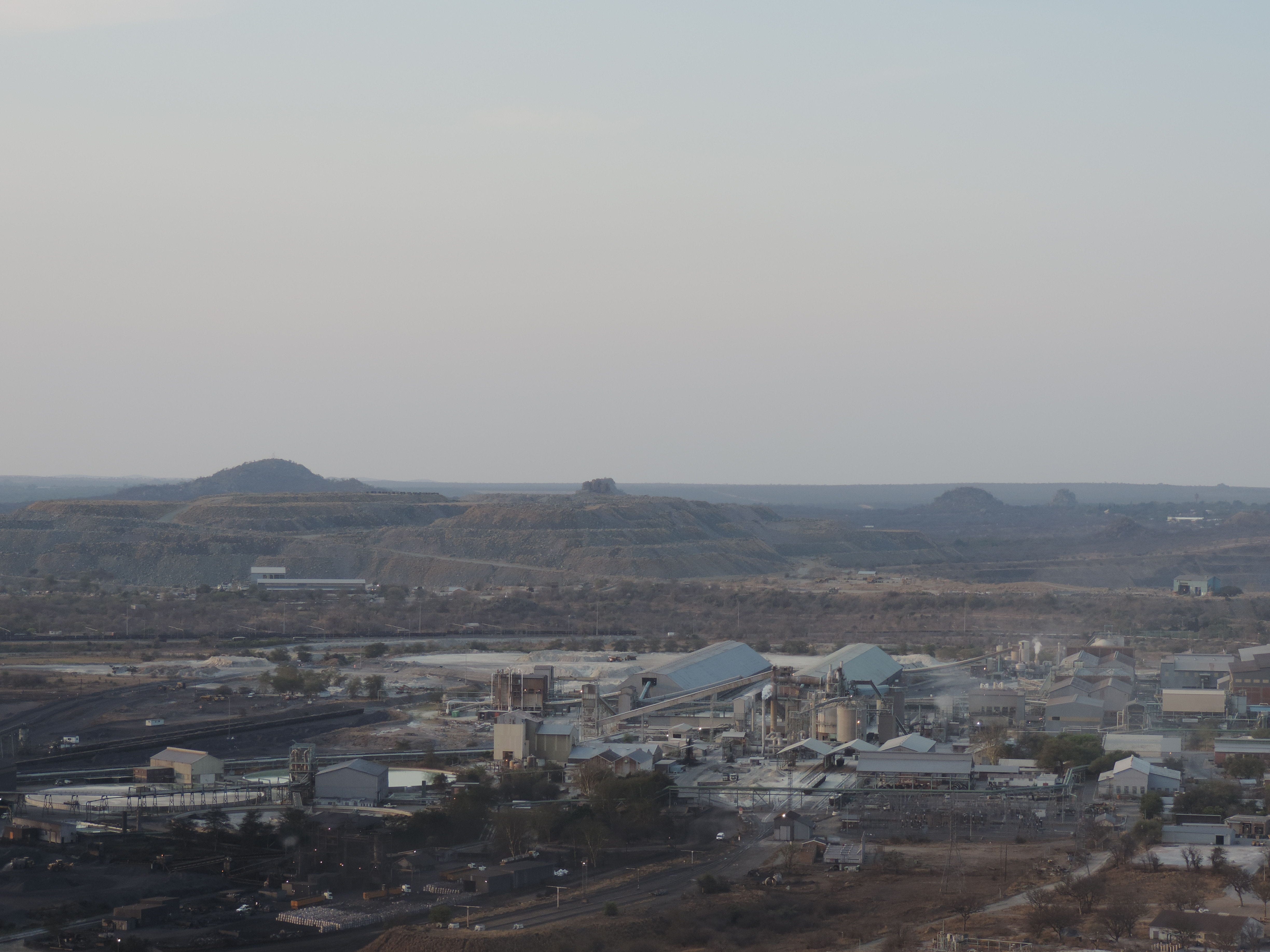
The world’s simplest mines are forgotten. Palabora endures because it never became simple. Each decade demands new methods, capital and patience. Beneath the Limpopo hill, engineers now manage heat, pressure and depth unimaginable to earlier generations. Yet they solve the same problem: how to mine a rock that constantly changes the rules.
Palabora’s orebody is a carbonatite–foskorite intrusion with copper, magnetite, phosphate, vermiculite and rare earth elements in one pipe. Each requires distinct processing, infrastructure and investment. This is not a single-answer resource, but a system. Systems like this resist one generation’s methods.
The plant reflects this complexity: sulphide flotation for copper, magnetic separation for magnetite, specialised circuits for vermiculite, and on-site smelting and refining. Few copper mines globally reach this level of processing integration in a single industrial complex.
Few mines have reinvented their mining method twice in one footprint. Palabora did. The open pit produced copper, magnetite and vermiculite for decades, with an integrated concentrator, smelter and refinery. When the pit reached its limit, a US$465 million block cave, South Africa’s first in metal mining, overcame challenging rock and wall instability to ramp up to 30,000 tonnes per day. Then came Lift II: a R9.3 billion deepening into a 1,200-metre vent shaft, extending the mine's future into the 2040s. Each transition required true reinvention and raised capital and engineering complexity.
The hill produces far more than copper. Refined copper, magnetite, vermiculite, phosphate from tailings, nickel and precious metals supply steel, fertiliser, construction, and chemicals beyond South Africa’s borders. Palabora is silent infrastructure for global supply chains.
The orebody remains active. Lift II will run for decades. Historic tailings hold recoverable copper, cobalt and other metals accessible through modern hydrometallurgy—a second-generation orebody that extends productive life beyond primary ore depletion. Phosphate and rare earths at Phalaborwa are coming back into focus. As rare earth supply chains tighten worldwide, Palabora’s inventory and processing position it as critical for clean-energy metals. Lift II is not the end. It is a bridge.
But the bridge must lead somewhere. Ba-Phalaborwa’s economy has depended on this hill for centuries. Planning the transition from extraction to something sustainable is not a footnote. It is the next engineering challenge. The Industrial Development Corporation’s ongoing shareholding signals a long-term responsibility, not just a short-term calculation.
#MiningIsHuman means holding two realities: extracting a complex, productive resource with patience and capital, and designing with equal rigour the economy that must one day stand without it.
This story is also on LinkedIn, published on 10 Feb 2026.