
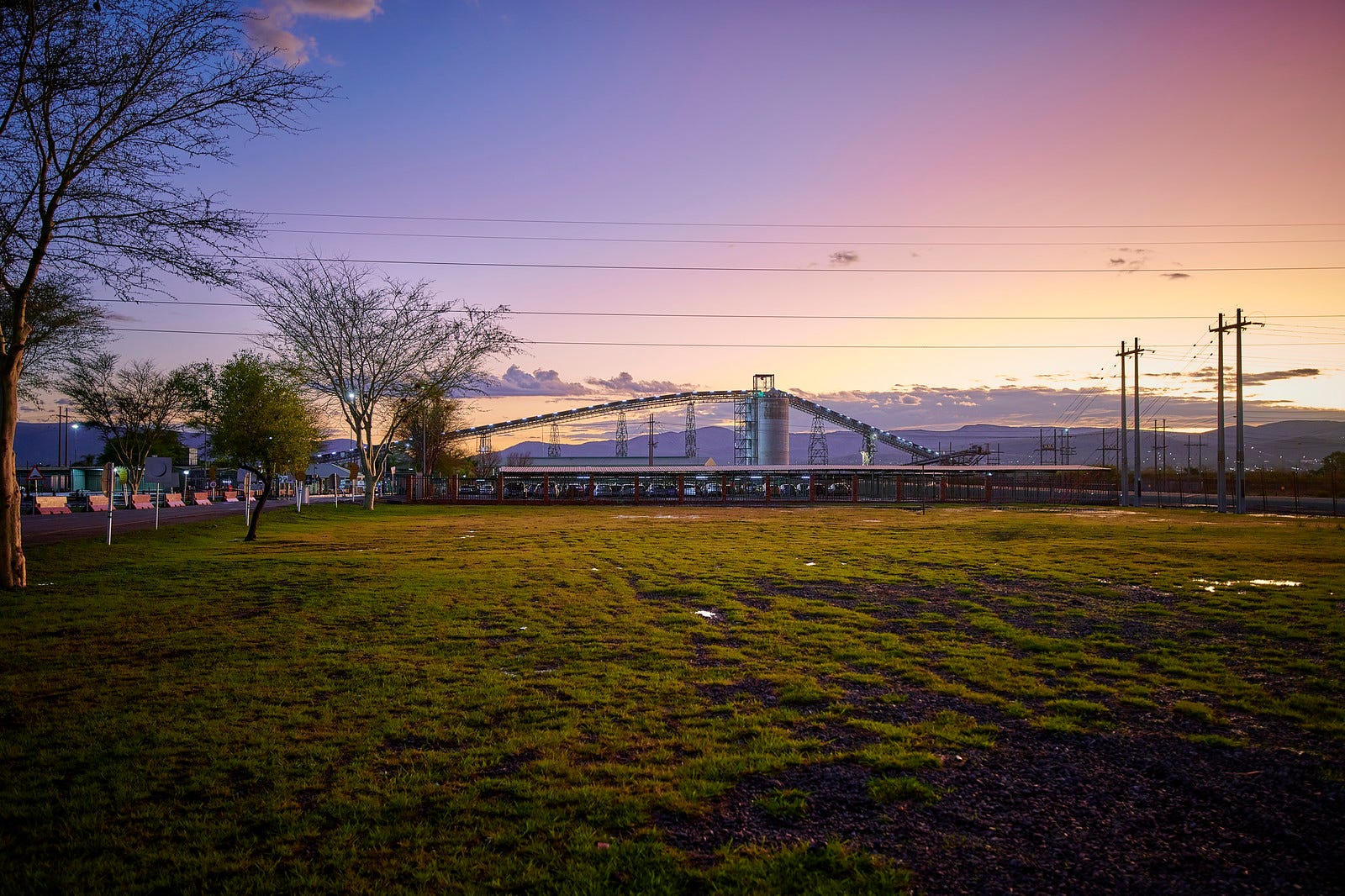
The land around Rustenburg was never empty. The Bafokeng farmed this valley for centuries—until Boer farmers dispossessed them. When land was later assembled for mining, it was acquired from those same Boer farmers.
Kgosi August Mokgatle foresaw what mining would bring. Before PGMs were found, he sent Bafokeng men to Kimberley to mine, earn and learn. They returned with mining knowledge
In 1924, a farmer panning for gold in the eastern Bushveld found small silvery grains. He sealed a sample in an aspirin bottle and sent it to Merensky. The answer: platinum. A rush began. Claims blanketed the Bushveld Complex, including Rustenburg.
But as in Springbok 70 years earlier, the price collapsed. The world did not yet have enough uses for platinum. Companies failed, investments vanished. Survivors merged fragments into Rustenburg Platinum Mines in 1932—not from ambition, but necessity. JCI later acquired a controlling interest.
Almost a century ago, the first vertical shafts were sunk. The mine offered a seam up to one meter thick, running kilometres. Workers, bent at the waist, traced platinum, palladium and other minerals through tunnels.
The Bafokeng lived nearby and had mining experience. JCI did not make them partners. Instead, it used migrant labour, repeating systems from Kimberley and the Rand—hostels, single-sex housing, families separated.
In 1960, Anglo American acquired a controlling interest in JCI. For 5 decades, Rustenburg powered the world's leading PGM producer—patient capital and belief in this mine and reef, enduring price shocks as the social framework around SA mining steadily eroded. By the late 1990s, that erosion was visible. In Rustenburg, social upheaval emerged—a crack in the mining labour regime that foreshadowed later tragedies.
In 2016, Sibanye bought Rustenburg for R1.5 billion plus deferred payments. Anglo was moving toward mechanisation and consolidation. Sibanye moved the other way—choosing handheld mining of a mature reef, a competence others were abandoning. Sibanye had built its reputation extracting value from mature, deep-level gold mines—Rustenburg was the same bet.
Over 9 decades, these shafts produced tens of millions of ounces. What remains is mined much as it always has been—by hand, a metre at a time.
The BEE scheme, employees, community trust and local communities, performs. By 2023, the Community Development Trust had received over R300 million, R84 million deployed into social performance. For a labour-intensive operation on a declining reef, this is exemplary shared ownership.
The Bafokeng hold a different position as landlords. Sibanye mines beneath their land under a surface lease. For a time, it seemed their landowner status might be lost. It should never have been negotiable. Now this is Bafokeng land.
This story is also on LinkedIn, published on 10 Mar 2026.