
From the late 1860s, Kgosi August Mokgatle sent young Bafokeng men to the Kimberley diamond fields. Neither the kgosi nor his young men had any idea what lay 2 billion years beneath their feet.
They worked in Kimberley, sending wages home to buy back land, previously lost, in the Rustenburg valley. By the early 20th century, they owned twelve Rustenburg properties — almost a fifth of black-owned land in the Transvaal. Not wealthy, but strategic.
When platinum was discovered in the 1920s and the rush collapsed into consolidation, Rustenburg Platinum Mines assembled failed mining claims over land not owned by the Bafokeng. The Bafokeng land, previously unclaimed by speculators, became the crucial adjacency.
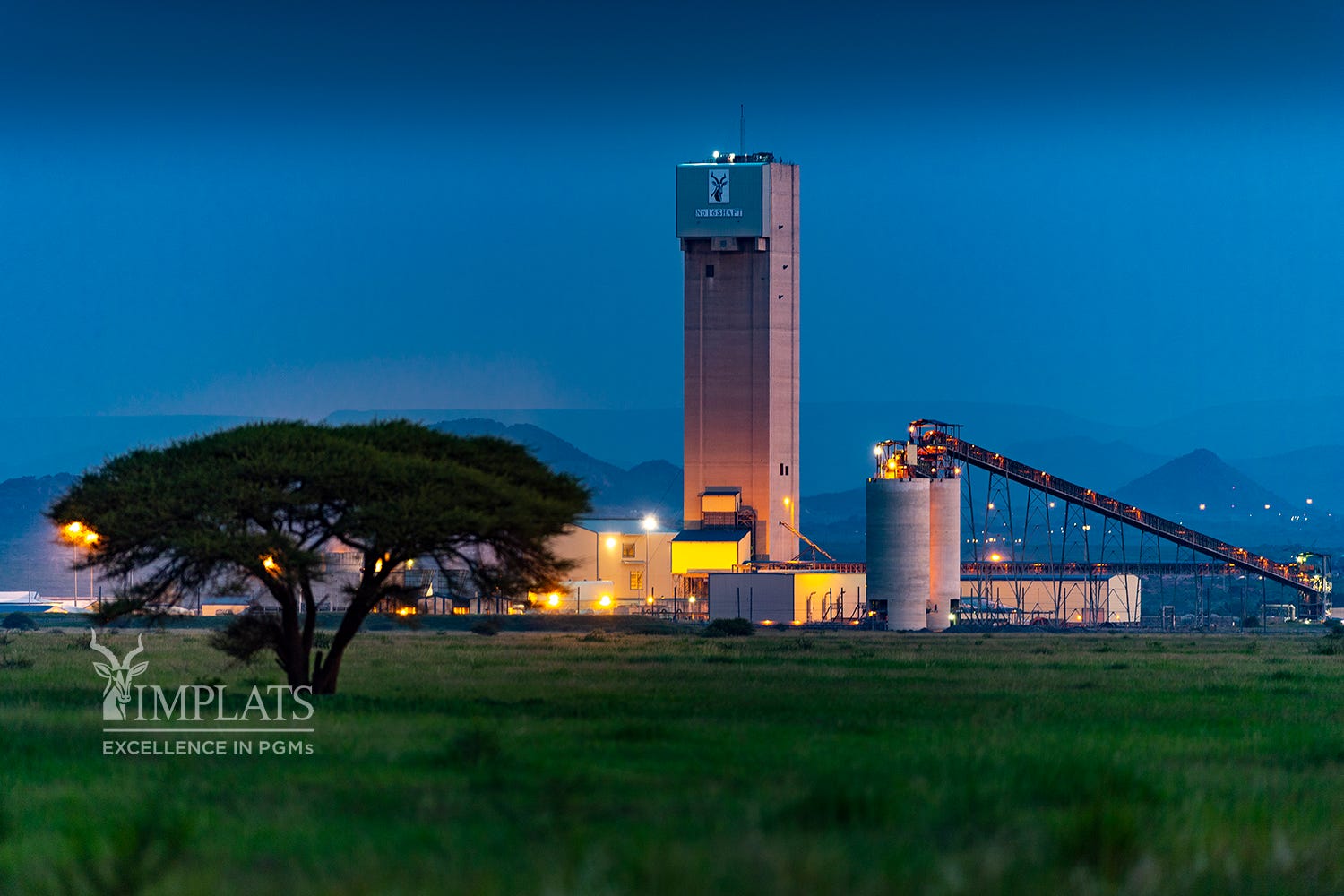
In 1968, Impala secured a 12,000-hectare lease. Production started in July 1969. The mine grew quickly, reaching 100,000 ounces a year. By the mid-1970s, demand for catalytic converters fuelled growth. Impala supplied GM with 300,000 platinum and 120,000 palladium ounces annually. UG2 mining began in the early 1980s. By 2007 output reached two million ounces a year. In 47 years, a total of 50 million ounces were produced. Thirteen shafts, four design generations, a workforce once over 40,000.
In 1977, the bantustan Bophuthatswana was declared “independent”. It seized Bafokeng land and royalties, exiled the kgosi to Botswana, and imprisoned his wife and dozens of Bafokeng women. It did not recognise the Bafokeng as a people with their own legitimate governance. The first royalty payment had arrived in 1978 — and then stopped for nearly two decades.
The Bafokeng responded with lawyers. Through the 1980s and 1990s, they challenged the Bophuthatswana government in court. Their 1999 victory changed the relationship between mineral owners and holders of mining rights in South Africa.
A new era began in 2007. Impala prepaid all future royalties — R12.5 billion — for a 13.4% Bafokeng shareholding, three board seats including deputy chair, and R170 million for community development. From young men who walked to Kimberley to a Johannesburg boardroom — the arc is extraordinary.
In 2023, Impala acquired Royal Bafokeng Platinum and neighbouring mines. On 1 July 2025, Impala Bafokeng and Rustenburg merged into one entity. The land the kgosi’s people repurchased is now central to a top PGM operation. By half-year FY2026, the consolidated operation produced in excess of 888,000 6E ounces.
The Bafokeng story is not finished. The land they reclaimed became the foundation for a partnership that transformed PGM mining and set a precedent for industry change.
Today this is one of the most valuable PGM operations in the world, owned in part by the people whose land made it possible, and operated by a company that understands exactly what that means.
Adjacency changed everything.
This story is also on LinkedIn, published on 17 Mar 2026.