
As this series moves from the coastal story of the early colonial Cape toward the vast interior mineral endowments, this is the right moment to pause. Not to look forward yet, but to look further back.
Mining did not begin with colonial capital. It did not arrive with ships, charters or stock exchanges. Here, in what is often called the cradle of humanity, it is as old as humanity itself.
Long before concession companies, survey pegs and joint-stock ventures, mining in southern Africa was organised and capable enough to support long-distance trade. Modern mining is not the starting point. It is only a new chapter.
As a lawyer, my attention is drawn to records. One of the most important modern acknowledgements of ancient mining comes from the Constitutional Court in the Alexkor and Richtersveld case. The court confirmed that the Richtersveld Nama community’s relationship with land and minerals pre-dated Crown sovereignty and was governed by its own law. That finding dismantles the idea that mining here “began” with colonial companies.
Stone for tools was not picked up at random. Across southern Africa, the same distinctive stone types appear far from where they naturally occur. Chert, jasper, hornstone and silcrete turn up hundreds of kilometres from their source. People knew which stone worked best. They returned to the same places to get it. They carried it with them or traded it onwards. Long before written records, stone was already moving through reliable trade routes.
Iron oxides were mined at scale across the Northern Cape iron-ore fields for red and reflective pigments used in adornment and ritual.
Copper was smelted and traded from the Limpopo and Northern Cape copper districts, with links to Palabora and the Springbok region. Tin was deliberately mined at Rooiberg and alloyed with copper. That points to planning, not chance.
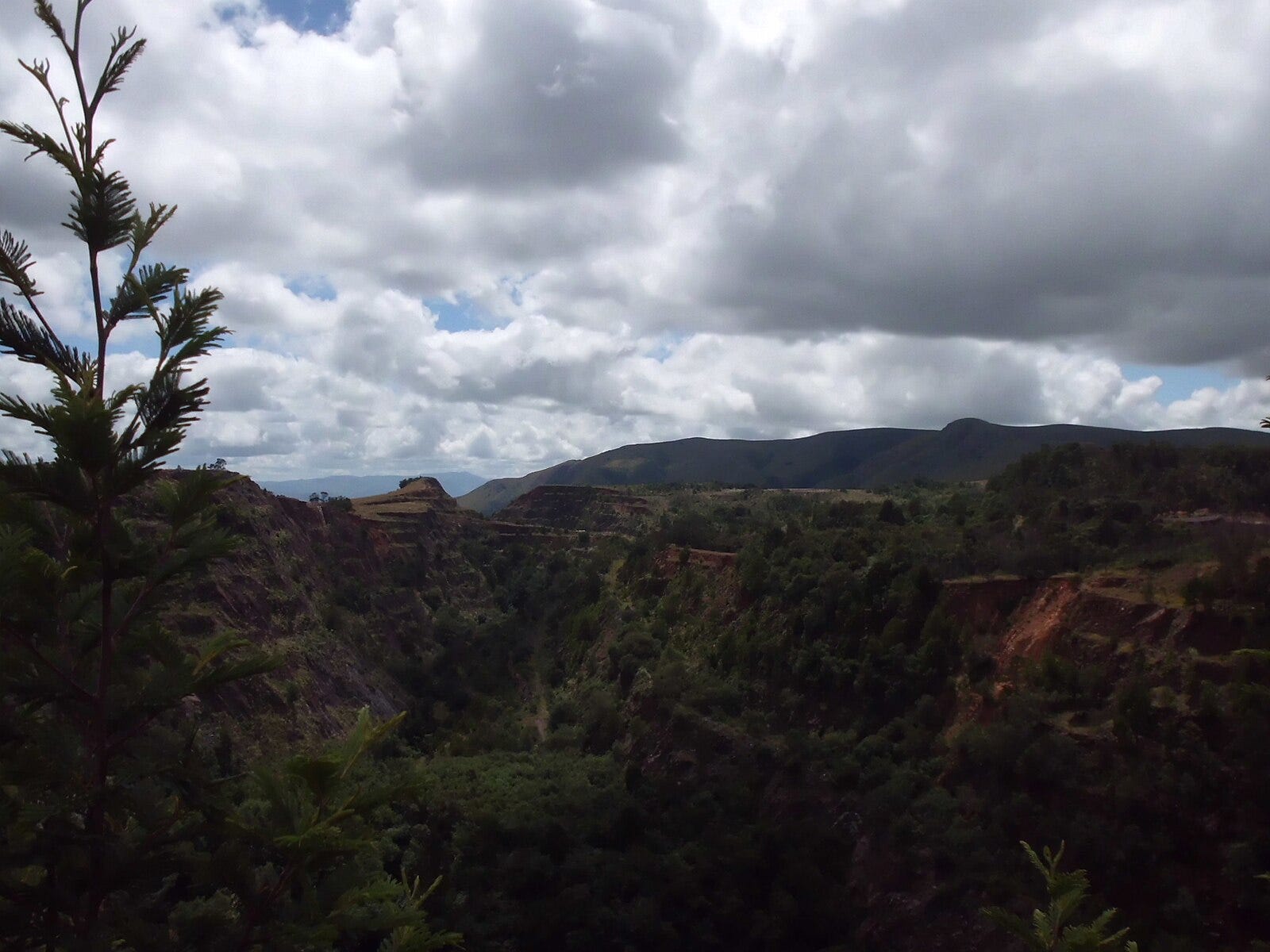
And then there is Lion Cavern at Ngwenya in Eswatini, the oldest known ochre mine in the world. It records intensive haematite extraction stretching back roughly 48,000 years, followed much later by Iron Age iron-ore working on the same hill. One ore body serving different technologies and cultures across tens of millennia.
By the turn of the first millennium, miners across the Limpopo basin, eastern Botswana, northern South Africa and Zimbabwe were working both river gold and reef gold with shallow shafts, stopes and washing circuits that show a practical understanding of continuity, water and grade. That production underpinned inland trade and later fed the economies of Mapungubwe and Great Zimbabwe.
This pause marks that long before the VOC’s early expeditions and the later rush to diamonds, gold and copper, there lies a far longer, quieter history of mining that belongs to Africa’s people.
Mining did not begin with colonial capital. It has always been human. Here, in the cradle of humankind, most of all.
This story is also on LinkedIn, published on 12 Dec 2025.