MiningIsHuman Story 5: The Copper That Remained
A Journey Through Southern Africa’s First Industrially Mined Metal

The hill that never stopped
Loolekop is a low-carbonatite hill in the Limpopo valley, south of the Kruger Park, in territory the Ba-Phalaborwa people have occupied for over a thousand years. It does not look like the site of the most enduring copper mine in South Africa. It looks like a hill.
Around 770 AD, Iron Age miners began working copper from its surface. They did not have the language of grades or metallurgy as later centuries would define it. They had something more durable: accumulated, inherited knowledge of a specific place, passed down across generations through practice and use. They knew what the hill held. They returned to it across centuries because it kept yielding.
The geology justified the attention. Loolekop is a carbonatite-foskorite intrusion — a volcanic pipe that forced its way through the surrounding rock and crystallised into something geologically rare: copper, magnetite, phosphate, vermiculite, and rare earth elements, all in one body. Each mineral requires distinct processing, distinct infrastructure, and distinct investment. This is not a single-answer resource. It is a system. Systems like this resist one generation’s methods. They outlast the companies that try to simplify them.
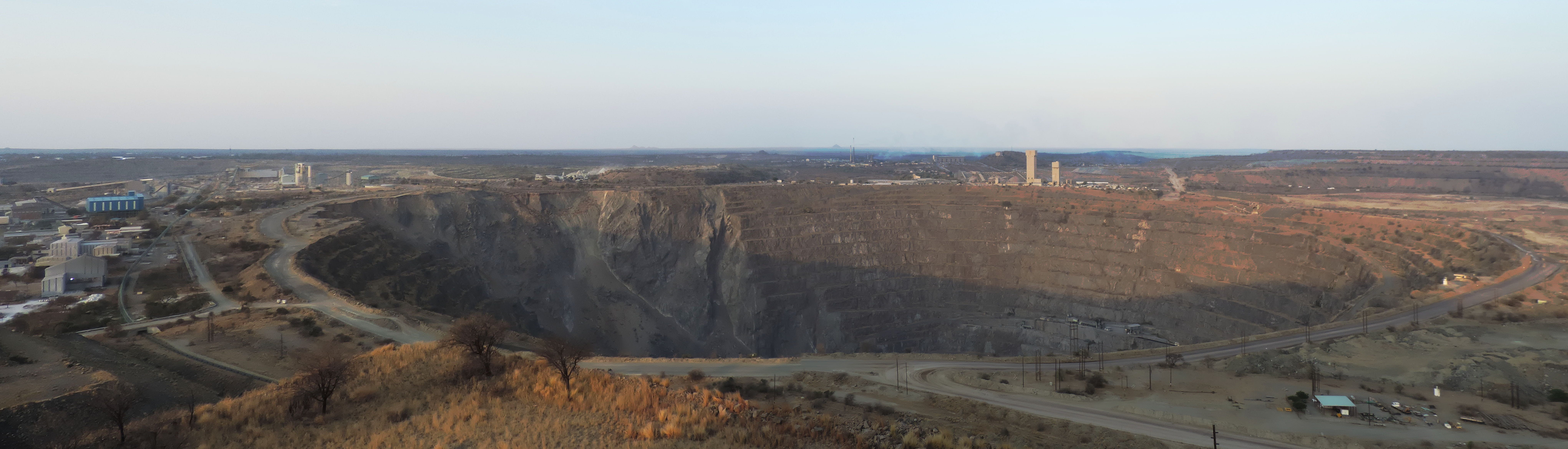
In 1956, Rio Tinto, and Newmont formed Palabora Mining Company. In time, Anglo American joined the shareholding. It was patient capital deployed at scale—building an integrated concentrator, smelter, and refinery in a remote location with no guarantee of returns. The open pit operated from 1964 to 2002, producing over 2.7 million tonnes of copper, peaking at over 80,000 tonnes of ore moved per day. When the pit reached its limit, a US$410 million block cave—South Africa’s first in metal mining—was engineered through rock conditions that tested every assumption the team brought to it. It ramped to 30,000 tonnes per day by 2005. The majors stayed for 57 years. In mining, that commitment is the real achievement, not just the copper produced.
In 2013, a consortium led by HBIS and the Industrial Development Corporation took over. The long-term investment continued. Over the past decade, the mine remained profitable and invested R9.3 billion in the Lift II expansion—a 1,200-metre vent shaft that deepened the operation into the 2040s. Community investment and Social and Labour Plan commitments continued uninterrupted.
What remained after the majors’ exit? Roads, rail, and electrical systems that still support Ba-Phalaborwa’s economy. An industrial complex refining copper, magnetite, and vermiculite for global supply chains. A workforce skilled in block-caving. The Palabora Foundation, which still funds education, health, and community projects across the district.
The test of mining is not what is taken. It is what remains.
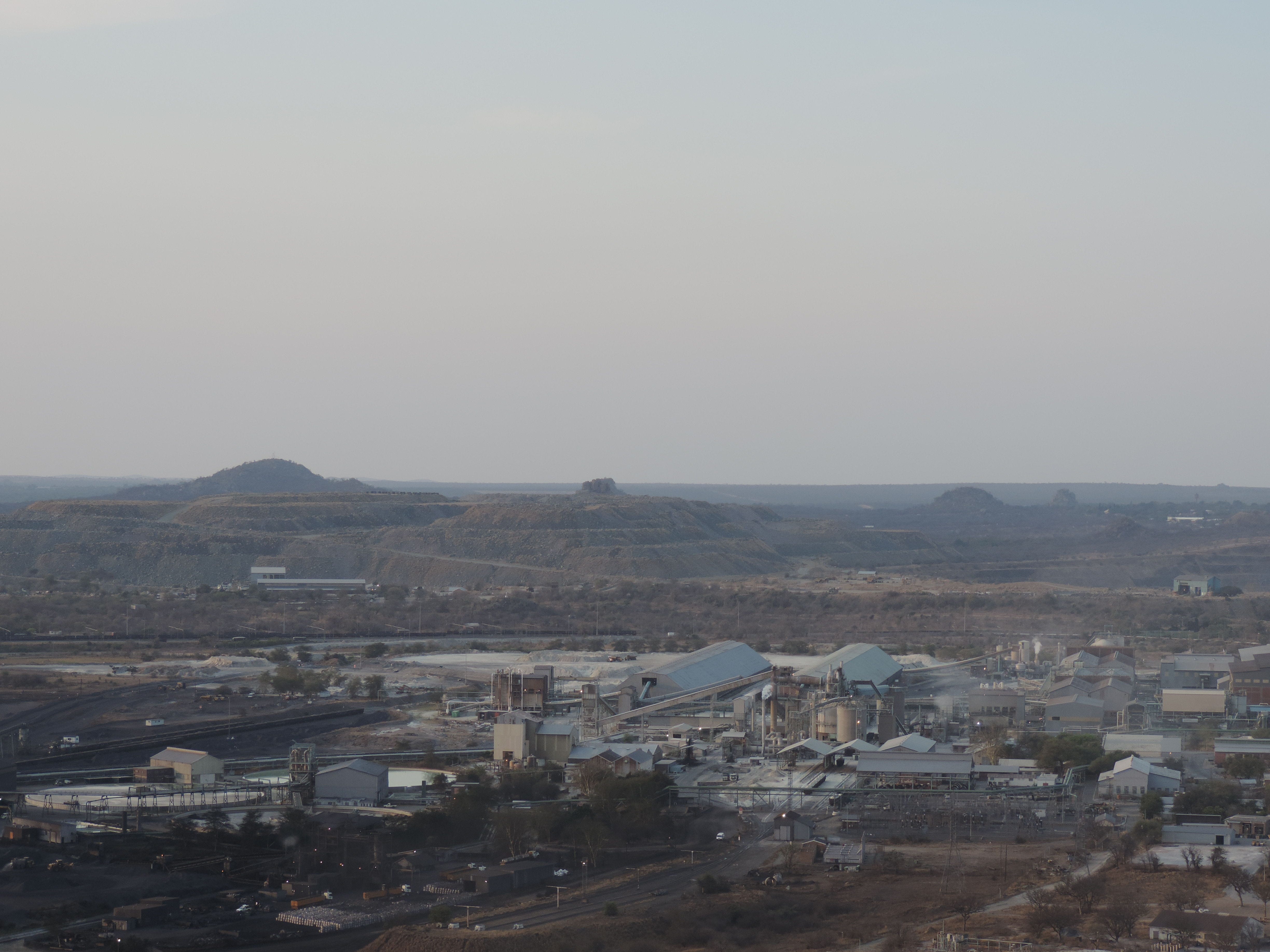
By that measure, Palabora is South Africa’s most successful copper mine. Twelve centuries from Iron Age tunnels to Lift II. Three ownership cycles. Each transition required reinvention. Each left something behind that the next generation could use.
The hill has not finished. Historic tailings hold recoverable copper, cobalt, and other metals. Modern hydrometallurgy can access them. Rare earth elements, now in focus as global supply chains tighten, are in Palabora’s inventory. Lift II is not the end. It is a bridge. But bridges must lead somewhere. Ba-Phalaborwa’s economy has depended on this hill for longer than most nations have existed. Planning what comes after extraction is not a footnote—it is the next engineering challenge.
The mine that forgot its name
To the north of Phalaborwa, the Musina people had been working copper in the Limpopo valley for centuries. The same pattern: surface workings first, then shallow shafts following the ore, knowledge accumulated and passed forward across generations. A landscape understood from the inside.
In 1903, Colonel John Pascoe Grenfell was shown the ancient workings. Two years later, he registered the Messina Transvaal Development Company. The shafts sunk into the Musina copper deposits were named Harper, and Campbell — after members of his own party. Not after the community that had shown him where to look.
The mine operated for nearly ninety years. It extracted about 700,000 tonnes of copper from 40 million tonnes of ore. This was a sustained, commercially significant operation across five shafts, descending close to a kilometre below surface. The mine’s economics were real. So was the structure built to protect them.
The historian W.F. Malunga, writing in Historia on labour control at the Messina copper mines, documented how the Messina (Transvaal) Development Company organised its compounds and recreation. Four ethnically stratified compounds — Harper, Campbell, Artonvilla, and Messina — housed workers segregated by origin, and management deliberately structured sport and leisure to sharpen ethnic jealousies and fragment the solidarity that collective wage action required. In Malunga’s account, former mine employees recall these programmes as instruments for maintaining a low-conflict profile among African workers while leaving them in miserable social and economic conditions. Athletics meetings were expanded after 1946, partly to defuse tensions and reduce the violence and injuries that often followed weekends in the compounds before men returned to work on Monday mornings.
This was not unusual in the context of Southern African mining. What was unusual was what happened in 1991.
The Limpopo government renamed the town Musina in 2002, restoring the name the Musina people had always used. The mine’s registration still carries the colonial spelling. That discrepancy is not administrative oversight. It is a document of what was claimed and what was left uncorrected.
When the mine closed in 1991, it left approximately 90 hectares of unrehabilitated tailings in and around the town. Not elsewhere — in the town. The land claim filed by the originating community remains unresolved more than thirty years later. The infrastructure that Palabora left behind — roads, schools, the Foundation — has no equivalent in Messina. The shafts are sealed. The tailings remain. The community that showed Grenfell where to look is still waiting for an answer to what was taken and what was owed.
The geology was similar. The closure was not.
The ore that waited
The Prieska Copper Zinc Mine is located near Copperton, approximately 60 km southwest of the town of Prieska, beside the south bank of the Orange River. In the 1960s and 1970s, Anglovaal developed one of South Africa’s most significant copper-zinc deposits beneath the Kalahari. By the time it closed in 1991, the mine had produced 430,000 tonnes of copper and one million tonnes of zinc from 47 million tonnes of ore.
It did not close because the ore was gone.
It closed because the copper price made it uneconomic to continue. Anglovaal walked away from 31 million tonnes of remaining mineralisation grading 1.2% copper and 3.6% zinc. That ore sat in the ground through the 1990s, through the 2000s, through the decade that followed. The town of Copperton, which existed because of the mine, began the long, slow process of places that have been used and then set down. Contractors left. Families relocated. Young people moved on.
When Orion Minerals returned in the late 2010s, engineers found the core infrastructure intact: a kilometre-deep shaft, extensive underground development, major excavations still structurally sound. The rock had held. Trial mining in 2023 and 2024 confirmed it. The ore had waited. The question was whether the capital would follow.
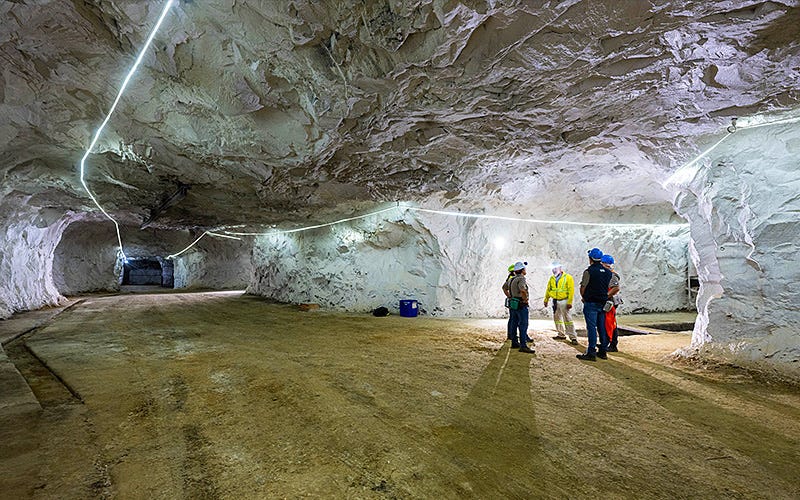
On 9 February 2026, it did. Orion secured a US$250 million prepayment facility and long-term offtake agreement with Glencore. The Industrial Development Corporation had already provided early works funding to unlock pre-development activity. Orion has been selected for BHP’s Xplor exploration programme, providing additional technical and financial backing as it explores for further copper opportunities in the Northern Cape.
The forecast is 22,000 tonnes of copper and 65,000 tonnes of zinc annually over thirteen years. Approximately 840 permanent jobs and 1,500 construction roles. Numbers that mean something specific in a province where unemployment runs close to 40%, in a town that remembers what the last closure felt like.
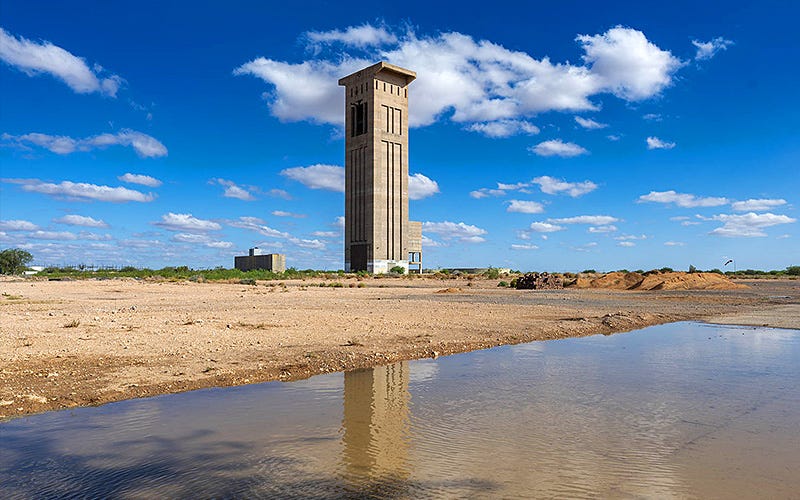
Prieska is not yet an operating mine. Orion still has to execute. Development risk remains. Costs must be managed. The copper price must hold. The Glencore prepayment is a serious signal — that level of commercial commitment rarely attaches to marginal projects — but a signal is not production. Copperton has seen promises before.
What has changed is the structure behind this one. A prepayment facility, an offtake agreement, IDC backing, and a major mining company’s exploration programme arriving together is a different kind of commitment than a single operator with capital and optimism. The terms have shifted. Whether the execution matches them is what Copperton will be watching.
The geology did not change between 1991 and 2026. The markets did. And this time, when the markets turned, the infrastructure was still there, and the ore was still in the ground.
The question that remains
Palabora and Messina. Two copper deposits in the same country, both worked by indigenous communities for centuries before colonial capital arrived, both absorbed into the industrial mining economy on terms set by others.
One leaves behind roads, schools, a foundation, and an operation extending into the 2040s.
One leaves behind 90 hectares of tailings and an unresolved land claim.
The difference is not geology. It is not era — both made their closure decisions in the same years. It is not the absence of law — the obligations existed. The difference is what the people who held decision-making power chose to do with it.
Prieska is a different kind of story. No centuries of prior working that the record establishes. A deposit found and developed in the modern industrial era, closed for economic reasons in 1991, now returning on the strength of a structured financing arrangement that did not exist the first time around. Its legacy is not yet written. Copperton is watching to see whether this cycle ends differently from the last.
That is the question that runs through every chapter of this copper story, from Van der Stel’s 1685 expedition to Orion’s 2026 facility. Not who found it. Not who extracted it. Who decided what happened next? And who bore the cost?
The copper arc in Southern Africa does not end here. North of the Limpopo, Zimbabwe’s Great Dyke holds its own story. The Zambian Copperbelt, which produced more copper in the twentieth century than anywhere in Africa, is in a different chapter of the same long cycle. The Democratic Republic of Congo sits on reserves that will shape the global copper market for generations. Those are journeys for another time.
What this arc has tried to hold is the full weight of the metal — from the ancient copper workings at Palabora, Musina, and Concordia to Copperton’s second chance in 2026. Ancient knowledge. Colonial extraction. Industrial capital. Patient stewardship. Abandonment. Return.
Copper has been mined in Southern Africa longer than almost anything else humans have done here. The question the district keeps asking has never changed. When the cycle turns again, what will have been built that lasts?
Further Reading (accessed 14 March 2026):
Palabora / Phalaborwa (Geology and Ancient Mining)
Geology and mining operations at Palabora Mining Company Limited, Phalaborwa
https://journals.co.za/doi/10.10520/AJA0038223X_175
Some observations on “ancient” mining at Phalaborwa
https://journals.co.za/doi/10.10520/AJA0038223X_352
Die metaalbewerkers van Phalaborwa — archaeology and ethnohistory of Ba-Phalaborwa metalworkers
https://repository.up.ac.za/items/43b414ac-bf10-445e-aaac-905a52c49861
General history and operation of Palabora Copper Mine
https://www.showcaves.com/english/za/mines/Palabora.html
The Phalaborwa (Palabora) deposit and its potential IOCG connection
https://portergeo.com.au/full_text/Vielreicher_etal_Phalaborwa_Potential_IOCG_Connection-PGC_Publishing.pdf
Messina / Musina (History, Labour, Tailings and Land Claims)
Copper working in the Messina district — precolonial mining
https://journals.co.za/doi/pdf/10.10520/AJA0038223X_360
W. F. Malunga — Instruments of labour control at the Messina Copper Mines, 1920–1960
https://upjournals.up.ac.za/index.php/historia/article/view/1792/1681
W. F. Malunga — Foreign African migrant labour at the Messina Copper Mines
https://upjournals.up.ac.za/index.php/historia/article/view/1557
Retreatability analysis of the Musina copper mine tailings
https://d-nb.info/1223595064/34
Evaluation of copper tailings from the abandoned Messina Mine for possible reuse in recreational projects
https://jdmlm.ub.ac.id/index.php/jdmlm/article/view/1091
Land claims in South Africa: uniqueness, historical distortions and injustices on the copper miners of Musina
https://newcontree.org.za/index.php/nc/article/view/33
Prieska / Copperton (Project and Development)
Prieska Copper Zinc Project — Orion Minerals
https://www.orionminerals.com.au/projects/prieska-copper-zinc-project/
The Prieska Copper Zinc Mine Project — Global Africa Network
https://www.globalafricanetwork.com/company-news/the-prieska-copper-zinc-mine-project/
Prieska copper-zinc mine, South Africa — update
https://www.miningweekly.com/article/prieska-copperzinc-mine-south-africa-update-2026-02-13